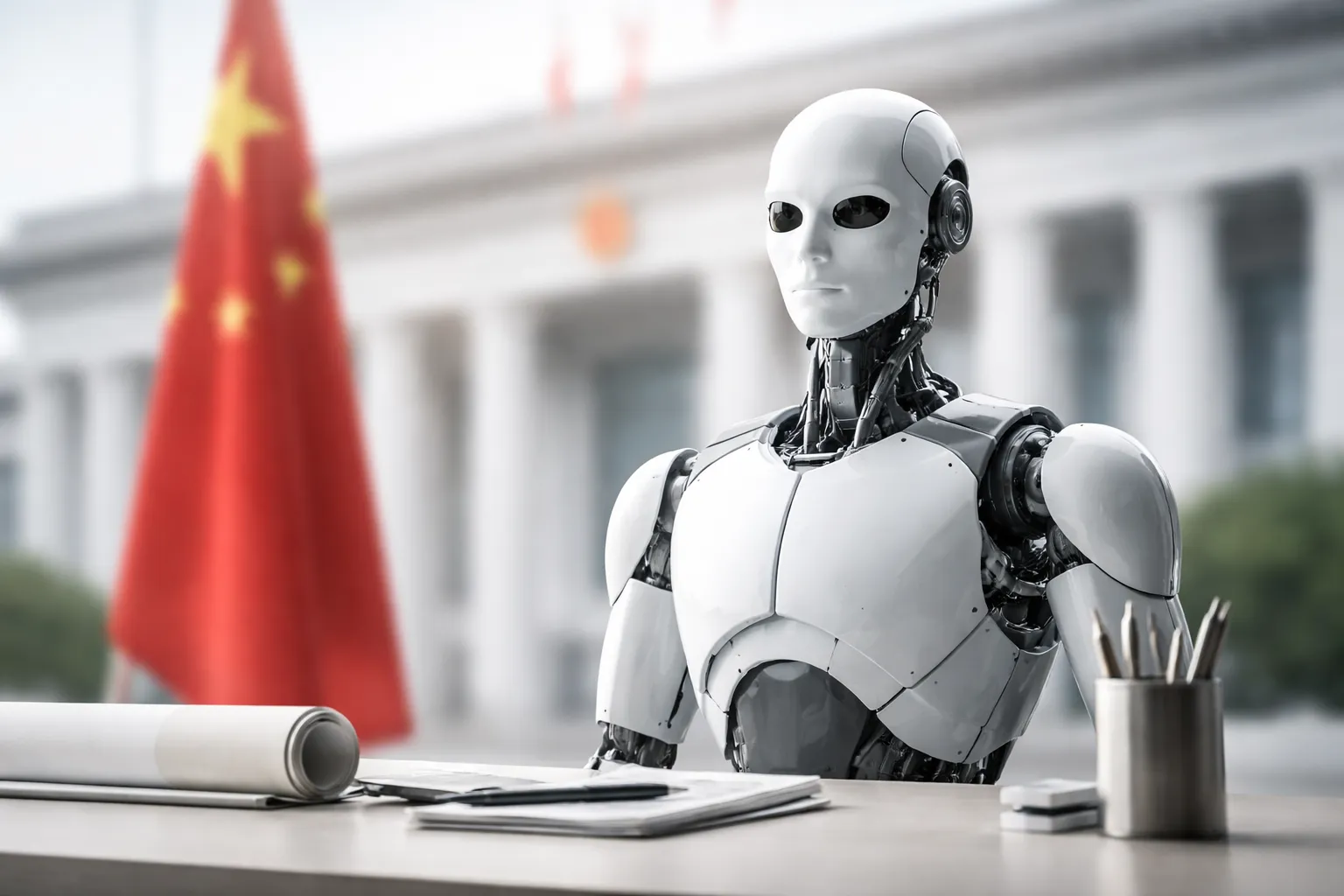
A national vision for humanoid robotics development was outlined during China’s ongoing Two Sessions policy meetings, where Xiaomi founder Lei Jun described humanoid robots as a potential successor to major technology platforms such as computers, smartphones, and new energy vehicles. The remarks signal growing policy and industry alignment around embodied AI as a future driver of manufacturing productivity and automation.
Lei, who serves as a deputy to the National People’s Congress, said current humanoid robots remain in what he described as an “apprentice stage.” While rapid technical progress is being made, most systems are not yet capable of operating as reliable workers in real production environments.
The comments place humanoid robotics within China’s broader industrial strategy, where policymakers have increasingly identified embodied AI and advanced robotics as part of the country’s “industries of the future.”
Manufacturing Identified as Initial Deployment Market
Lei pointed to smart manufacturing environments as the most practical early deployment scenario for humanoid robots. Tasks such as sorting, assembly, inspection, and repetitive industrial operations were highlighted as potential starting points where humanoid systems could augment factory labor.
Industrial facilities provide structured environments where robotics systems can operate with predictable workflows and clear economic value. For enterprise operators, this allows companies to evaluate productivity gains and return on investment in a controlled setting.
However, Lei also noted that most factories are not currently designed for humanoid workers. Production lines have historically been optimized for fixed automation equipment rather than mobile robots capable of performing human-like tasks.
This mismatch between robotics capability and factory infrastructure remains one of the key commercialization challenges facing the sector.
Economic Viability Still Developing
Despite increased attention and investment in humanoid robotics globally, the economic model for widespread deployment is still evolving.
Hardware costs remain high due to the complex integration of sensors, actuators, batteries, and AI computing systems required for humanoid mobility and manipulation. Engineering reliability is another critical factor, as robots must operate continuously in demanding industrial environments without failure.
For enterprise buyers, the transition from prototype demonstrations to production-ready systems will depend heavily on measurable improvements in reliability, safety, and cost efficiency.
The comments reflect a broader industry dynamic where technological feasibility is advancing rapidly, but operational economics are still being validated through pilot deployments.
Safety and Standards Expected to Play Larger Role
Lei also called for clearer regulatory and technical standards to support humanoid robotics deployment. Proposed measures include frameworks for safe human-robot collaboration and standardized approaches to integrating large AI models into robotics systems.
He also suggested the development of a unique identification system for humanoid robots to enable lifecycle tracking and oversight.
Such measures could become important for enterprise procurement decisions, as companies typically require well-defined safety and compliance standards before integrating new forms of automation into production environments.
Market Forecasts Highlight Long-Term Opportunity
Industry projections referenced during the discussion suggest the humanoid robotics market could expand significantly over the next decade. Estimates cited in the report indicate annual shipments could reach 2.6 million units globally by 2035, representing a market valued at roughly 140 billion yuan, or about $20.2 billion.
Longer-term forecasts suggest the sector could grow into a trillion-yuan industry if deployment economics and manufacturing scalability improve.
China may hold structural advantages in this transition due to its existing strengths in electronics manufacturing, batteries, motors, and robotics supply chains. Those capabilities could help accelerate the shift from laboratory prototypes to mass-produced humanoid systems.
For the broader robotics ecosystem, the next phase will likely depend on real-world deployment data from manufacturing pilots. Demonstrating consistent productivity improvements in factory settings will be critical in determining whether humanoid robots can evolve from experimental platforms into operational infrastructure for industrial automation.
Sources: China Daily