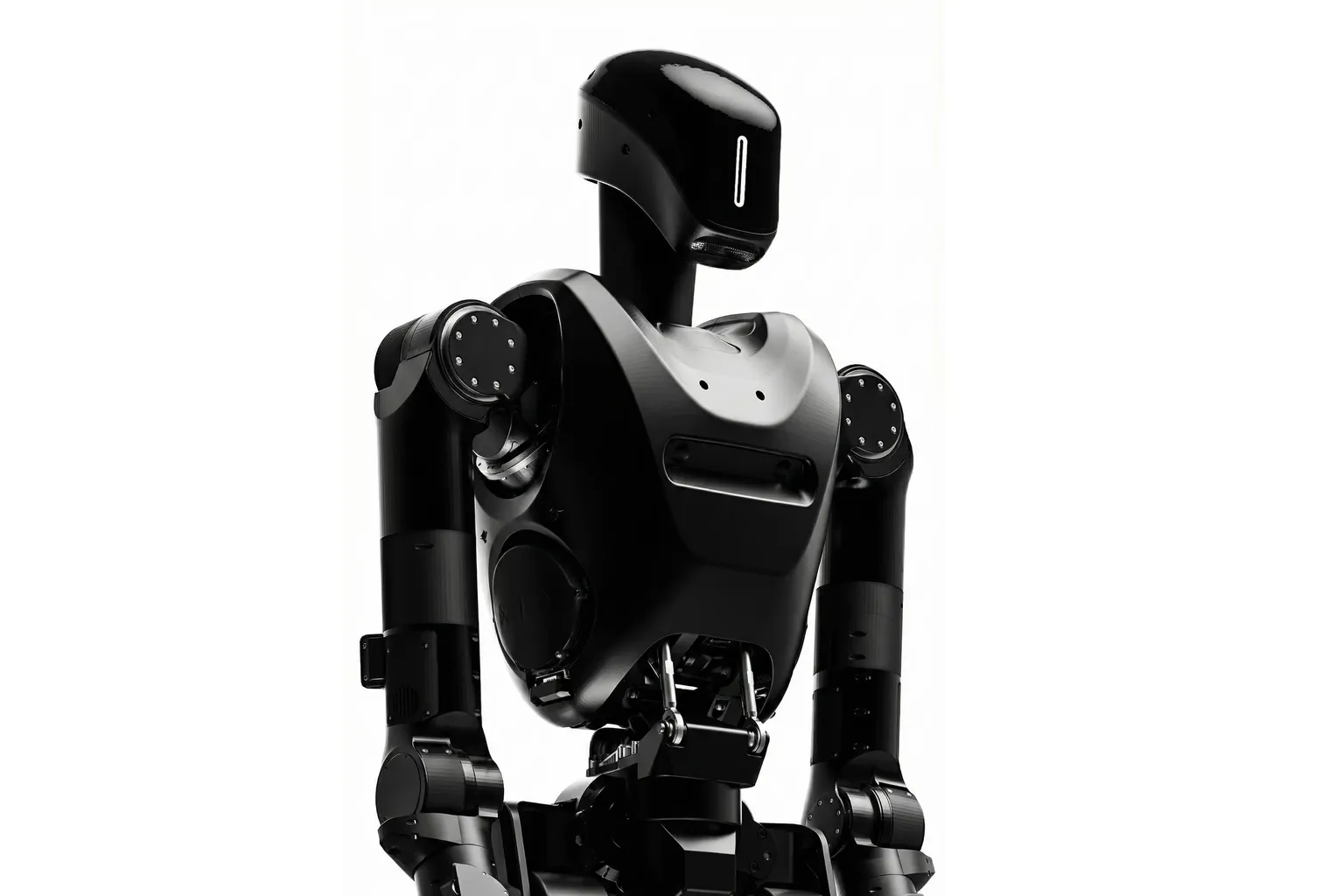
Foundation Robotics, a U.S.-based startup, has sent two of its Phantom MK-1 humanoid robots to Ukraine for frontline reconnaissance testing, according to reporting by TIME. The development represents one of the first disclosed instances of humanoid systems entering an active conflict environment, though details remain limited and unverified by defense procurement channels.
The reported deployment is based on statements from a company co-founder and involves a small number of units delivered in February 2026. The robots are described as being used for reconnaissance rather than direct combat, suggesting an exploratory phase rather than operational integration. No formal military contract, procurement framework, or government confirmation has been disclosed.
This distinction is critical for enterprise and investor interpretation. While the presence of humanoid robots in a live conflict zone marks a symbolic milestone, the absence of structured deployment signals indicates that the technology remains in early validation rather than scaled adoption.
Early Defense Signal Without Procurement Validation
Defense has long been viewed as a potential early market for advanced robotics due to its tolerance for high-cost, high-risk systems. However, commercialization in this segment typically requires clear procurement pathways, defined performance benchmarks, and long-term supplier relationships. None of these elements are currently visible in the Foundation Robotics case.
The reported use case, reconnaissance in contested environments, aligns with one of the more plausible near-term applications for humanoid systems. Tasks such as navigating human-built infrastructure, entering damaged structures, and operating equipment designed for human use are frequently cited as advantages of humanoid form factors. However, these capabilities remain constrained by reliability, power limitations, and autonomy challenges in unpredictable environments.
For enterprise operators evaluating humanoid robotics, this underscores a broader pattern across the industry. Demonstrations and pilot deployments are increasing, but few have transitioned into repeatable, economically viable systems with defined service models or maintenance frameworks.
Implications for Capital and Vendor Positioning
The visibility of a defense-adjacent deployment, even at limited scale, may influence capital allocation across the humanoid robotics sector. Investors have historically viewed defense as both a funding accelerant and a validation pathway, particularly for companies developing general-purpose robotic platforms.
However, the lack of transparency around performance metrics, operational outcomes, and customer validation introduces risk. Without these data points, it is difficult to assess whether such deployments contribute meaningfully to product maturity or simply function as signaling events in a competitive funding environment.
From a vendor competition perspective, the report places Foundation Robotics among a small group of companies willing to position humanoid systems in high-risk, real-world scenarios. This may create differentiation in narrative, but sustained advantage will depend on the ability to translate experimentation into structured deployments with measurable outcomes.
Regulatory and Safety Considerations
The introduction of humanoid systems into military contexts is likely to accelerate regulatory scrutiny, particularly around autonomy, decision-making authority, and system control. While the reported use case is reconnaissance, the broader trajectory raises questions about how such systems will be governed across both defense and commercial applications.
Regulatory frameworks developed in response to military use could have downstream effects on enterprise adoption, particularly in sectors requiring strict safety and compliance standards such as manufacturing, logistics, and healthcare.
What Comes Next
The next phase of validation will depend on whether deployments like this evolve into formal programs with defined requirements, budgets, and accountability structures. For now, the Foundation Robotics case should be viewed as an early signal of intent rather than evidence of deployment maturity.
For the broader humanoid robotics ecosystem, the development highlights both the expanding range of use cases and the gap that remains between prototype capability and scalable commercialization.